
Best Scuba Diving Insurance Plans
Scuba insurance protects you from high-cost medical emergencies during your scuba trip. The best travel insurance for scuba diving includes high limits for Emergency Medical and Medical Evacuation, plus coverage for lost and damaged gear. These are the most popular scuba diving travel plans on our site:



See a complete breakdown of these plans and more in our full review of the Best Adventure Travel Insurance Companies of 2026.
What Is Scuba Diving Insurance?
Scuba Diving Insurance Topics
- Does Standard Travel Insurance Cover Scuba Diving?
- Who Should Buy Scuba Diving Insurance?
- What Does Scuba Diving Insurance Cover?
- What Does Scuba Diving Insurance Not Cover?
- How Much Does Scuba Diving Travel Insurance Cost?
- How to Choose the Right Travel Insurance Plan for Your Dive Trip
- FAQs: Scuba Diving Insurance
- Related Articles
Scuba diving travel insurance is a type of travel insurance that covers diving beyond depth limits often excluded by standard travel insurance. Scuba insurance typically includes higher-than-average Emergency Medical limits for medical emergencies, and can cover common diving-related injuries, like slipping on a wet deck and blown eardrums. A good policy will also offer high limits for Medical Evacuation, in case you need to be airlifted from a vessel in the middle of the ocean.
These policies can also offer protection against other common scuba trip disruptions, like a cancelled trip due to a medical emergency, missed liveaboard departure, loss of your scuba diving equipment by an airline, or a non-dive-related illness like dengue fever.
Does Standard Travel Insurance Cover Scuba Diving?

Does Standard Travel Insurance Cover Scuba Diving?
No, scuba diving is frequently excluded by standard travel insurance plans, along with other hazardous activities. Standard travel insurance plans may cover recreational swimming and snorkeling, but they often exclude diving below a certain depth (often 18 meters), or scuba diving entirely.
For these reasons, it’s important to opt for an adventure travel insurance plan that includes scuba diving coverage.
Who Should Buy Scuba Diving Insurance?
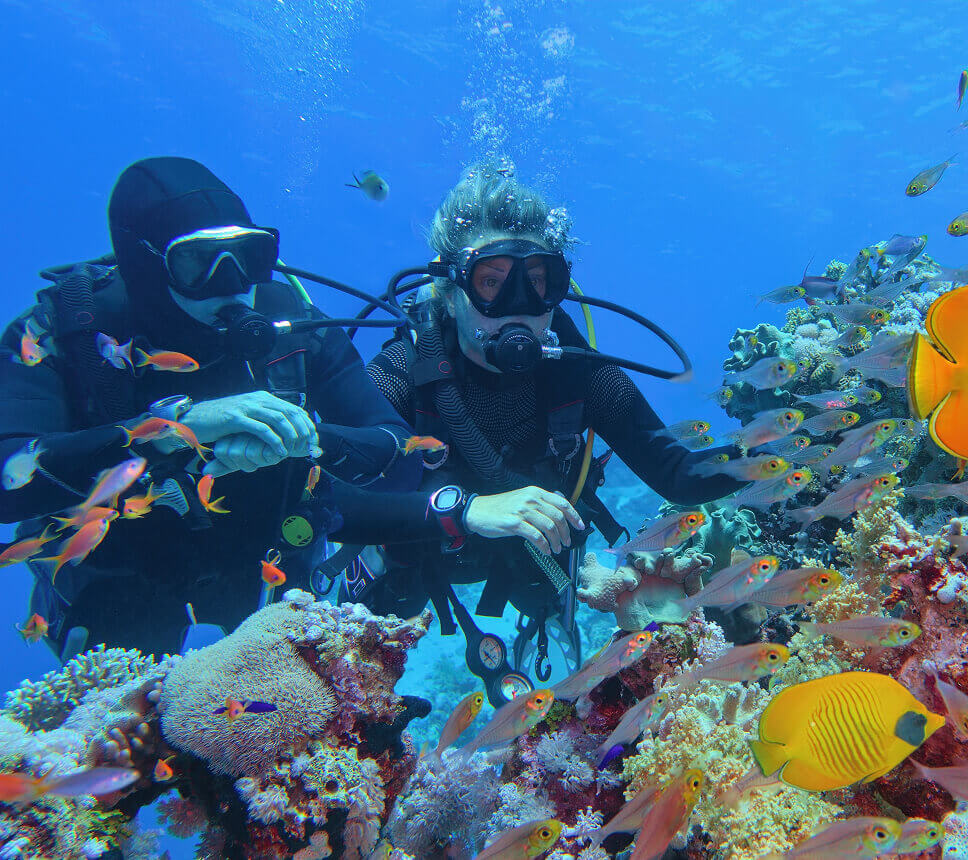
Who Should Buy Scuba Diving Insurance?
Scuba insurance is recommended for anyone planning to dive as part of their travels, and many dive companies and countries require you to have Scuba insurance before diving.
- First-time and beginner divers: Even shallow introductory dives carry risks that may not be covered by standard travel insurance or the dive center’s insurance policy, which typically only covers a center’s legal liability.
- Certified recreational divers: Look for coverage that fits your intended diving depth (40 meters, 60 meters).
- Liveaboard divers: A liveaboard trip can cost well over $2,000 per person and take you far from medical facilities, making Trip Cancellation and Medical Evacuation coverage essential.
- Older divers and those with pre-existing conditions: A plan with Pre-Existing Condition coverage will help you avoid coverage gaps.
- Cruise passengers who dive: You’ll need a cruise travel insurance plan that covers both diving and other mishaps like missing your ship due to a late excursion.
To see exact pricing for your trip, try our travel insurance comparison tool. Simply enter your trip details to see all available plans and prices. Start a Quote
What Does Scuba Diving Insurance Cover?
Basic scuba diving travel insurance can cover medical emergencies, whereas more comprehensive policies tend to offer coverage for other common travel issues like missed flights and delayed luggage, lost gear, full trip cancellations, and more.
Below is a closer look at the most common travel insurance coverage found on scuba policies.
Emergency Medical coverage reimburses medical costs for accidents and injuries on your trip, both on the boat and on land. This is an important protection for scuba diving, where an emergency treatment for conditions like decompression sickness can cost more than $25,000. Look for plans with at least $100,000 worth of coverage per person.
Having medical protection is especially important on international dive trips where U.S. health insurance is not accepted. Note, a scuba travel insurance policy can also cover you for medical emergencies unrelated to your dives.
Medical Evacuation covers transport to the nearest appropriate medical facility in case of an emergency. This coverage is essential for trips abroad and for dives that take place in open water, as airlifts from a boat can be very pricey, especially if the nearest hospital with a hyperbaric chamber is far away. We recommend at least $250,000 worth of coverage per person.
You’ll need a plan with sports equipment coverage if you’re bringing along your own scuba gear, since regular baggage insurance may not cover it. This benefit protects your equipment against loss and damage during transport, and sometimes for the duration of your trip. Make sure the plan has a high enough individual item limit to sufficiently cover your equipment, as the value of your scuba gear may exceed limits on certain policies.
Trip Cancellation and Trip Interruption protections can reimburse non-refundable costs if your trip is cancelled or interrupted for a covered reason, like illness, injury, or weather. This is especially important if you’ve booked a pricier voyage, like a liveaboard trip. In fact, you may want to look for plans with higher trip cost limits for cancellation coverage (more than $10,000 per person), depending on your trip price.
Coverage for severe weather events is important because weather-related disruptions are a common mishap on scuba diving trips, especially in regions with frequent hurricanes. Scuba plans with Trip Cancellation and Interruption reimburses your non-refundable costs in case your scuba excursion is cancelled or cut short due to a storm.
If you’re planning a scuba excursion far from shore or a liveaboard trip, you should consider purchasing a plan with Search and Rescue coverage. It covers fuel costs, operating costs, vehicle rental and repair costs, and other expenses for a search and rescue operation in case you or your boat goes missing.
24/7 Emergency Assistance is an essential benefit for a scuba diving trip, where the risk of medical emergencies is high. You’ll get access to a 24/7 hotline that can help with everything from scheduling your dive, locating lost gear to coordinating your flight to the nearest hospital.
What Does Scuba Diving Insurance Not Cover?
Scuba diving travel insurance covers common scuba-diving incidents, but it won’t cover everything. Common exclusions include:
- Dive accidents that occur past a policy’s maximum depth limit (usually around 40-60 meters)
- Dive trips that are not led by a certified dive master
- Medical care for pre-existing medical condition flare-ups, unless stated otherwise
- Scuba divers who do not hold an active PADI license
- Cancellations or interruptions relating to known or foreseeable events
- Professional or commercial diving
- Diving against government travel advisories for your destination
Note that every policy is different, so you should check your policy certificate for the full list of exclusions.
How Much Does Scuba Diving Travel Insurance Cost?
As a rule of thumb, you should expect to pay 4-10% of your total trip cost for a comprehensive travel insurance policy. That said, our internal 2026 sales data shows that the average cost of scuba travel insurance is $32.50 per day or $423 per trip, with the average trip lasting 13 days and costing $6,750. This amounts to 6.3% of the total trip cost.
Costs can vary greatly based on your age, destination, trip length, coverage chosen, and more. For example, your scuba vacation may take you to a remote location, with higher premiums. Also, depending on your vicinity to a hospital, you might choose a plan with higher medical limits, which can substantially drive up the cost.
How to Choose the Right Travel Insurance Plan for Your Dive Trip
When picking divers insurance, keep in mind where you’ll be traveling, how far you’ll be from a hospital, and what else you’ll be doing on your trip.
Compare Plans for Multiple Providers
Always compare plans before making a purchase to ensure you find the best plan possible for the lowest price. Our quote tool offers handy features that allow you to filter plans, sort them by price, and compare them side by side.
Consider Your Destination’s Remoteness
Consider how far your scuba trip will take you from shore and from the nearest hospital with treatment for diving-related injuries. If you’re diving in a destination like the Maldives, Galapagos, or Indonesia, accessing medical care will be more difficult, and you’ll be in for an expensive helicopter ride to get to an adequate medical facility.
Consider the Depth at Which You’ll Be Diving
Scuba insurance plans have limits on diving depths, generally around 40 or 60 meters. Verify that your plan matches your intended diving depth, and stay within those limits on your trip. Your trip’s dive computer will log your depth, ascent rate, and bottom time. Insurance companies check these records and will likely deny your claim if they find that you exceed the limit.
Prioritize Plans With High Medical Benefits
As mentioned, scuba-related injuries can be expensive, especially far from shore, where access to medical care is limited, and you may need a long-distance evacuation. Look for plans with at least $100,000 of Emergency Medical and $250,000 of Medical Evacuation coverage.
Consider All Other Sports Activities
Not every vacation is scuba-focused, and you may have other hazardous activities lined up for your trip. Look for scuba insurance that covers all of your planned activities, such as:
- Snorkeling
- Hiking and trekking
- Mountain biking
- Skiing and snowboarding
- White water rafting
- Kayaking
- Zip lining



Scuba Diving Insurance FAQs
Scuba diving insurance plans commonly limit diving depth to 60 meters (130 feet), but it depends on the plan and whether you’re a certified diver. Some may restrict uncertified divers to shallower depths (e.g., 30 meters), while many plans exclude scuba diving completely.
Yes, travel insurance can cover decompression sickness if your plan includes scuba diving and your dive doesn’t exceed the plan’s depth limits. We recommend at least $100,000 of Emergency Medical and $250,000 of Medical Evacuation coverage for evacuation costs to a hospital with a hyperbaric chamber.
No, the Professional Association of Diving Instructors (PADI) does not sell travel insurance. It does partner with the Divers Alert Network (DAN) (a non-profit organization dedicated to diver safety) to offer scuba diving travel insurance to its members.
Yes, you generally need a diving certification (PADI, SSI, NAU) to be covered by a scuba diving insurance plan. However, some plans may cover uncertified divers for supervised training at shallower depths.
A DAN travel insurance plan is very similar to an adventure travel insurance policy. In addition to diving accidents, it covers other trip costs like cancellations, delays, missed connections, and lost luggage. It also offers Emergency Medical services and Emergency Evacuation services that are more specialized for scuba divers. If you’re a frequent diver or headed on a scuba-focused trip, DAN coverage may make good sense for you.
With that said, it’s possible to find more affordable coverage with better protection. We recommend comparing plans from at least 2-3 other travel insurance providers.
| DAN Travel Insurance | Tin Leg Adventure | |
|---|---|---|
| Medical Evacuation | $250,000–$1,000,000 | $1,000,000 |
| Emergency Medical | $25,000–$100,000 | $100,000 |
| Pre-Existing Condition Coverage | Available | Available |
| Trip Cancellation | 100% | 100% |
| Trip Interruption | 150% | 150% |
| Travel Delay | $1,000–$2,500 | $600 per person |
| Baggage Loss & Damage | $1,000–$2,500 | $1,000 per person |
| Baggage Delay | $250–$1,000 | $200 per person |
| Sports Equipment Coverage | $1,500–$2,500 (not available at the lowest level) | Covered under baggage insurance |
| 24/7 Emergency Assistance | Expert-led; coordinates airlifts directly with specialized dive medical teams | Covers transport to the nearest capable facility |
No, most primary health insurance plans, such as Medicare or an employer-sponsored policy, will not provide coverage for dive accidents, especially if you’re planning a trip outside the USA. If you plan on scuba diving, snorkeling, or participating in any other commonly excluded activity while traveling, we recommend dedicated scuba travel insurance.
Annual travel insurance plans generally exclude extreme activities and won’t cover scuba diving. If you’re taking multiple scuba trips in a year, consider purchasing travel medical insurance that covers scuba diving accidents to pair with your annual travel insurance policy.
No, credit card travel insurance typically excludes scuba diving. These plans also carry insufficient medical insurance to cover a scuba accident.
As soon as possible after your first trip deposit. Time-sensitive benefits like Pre-existing Condition and Cancel For Any Reason (CFAR) coverage are usually only available within 14-21 days of your deposit. Plus, buying early reduces the risk of a medical diagnosis or a weather event occurring that will be excluded from your insurance.
Scuba diving insurance may be a mandatory requirement depending on your destination and type of diving. Some countries like Spain, require scuba diving insurance. Liveaboard scuba diving trips and some resorts and dive operators may also require coverage.
Yes, if you buy insurance soon after making the initial deposit on your trip. Many scuba plans offer Pre-existing Condition waivers if purchased within 14-21 days of your deposit.
Related Articles
Resources 5 min read
Adventure Sports
Several adventure sports travel plans stand out among the ...
Read MoreBenefits 5 min read
Sports & Activities
Sports & Activities is a travel insurance benefit that ...
Read MoreResources 5 min read
Destination Country Information
Travel Insurance Requirements and Recommendations ...
Read MoreLast updated: September 10, 2026